SHRI members enjoyed early access to this article. Join SHRI here.
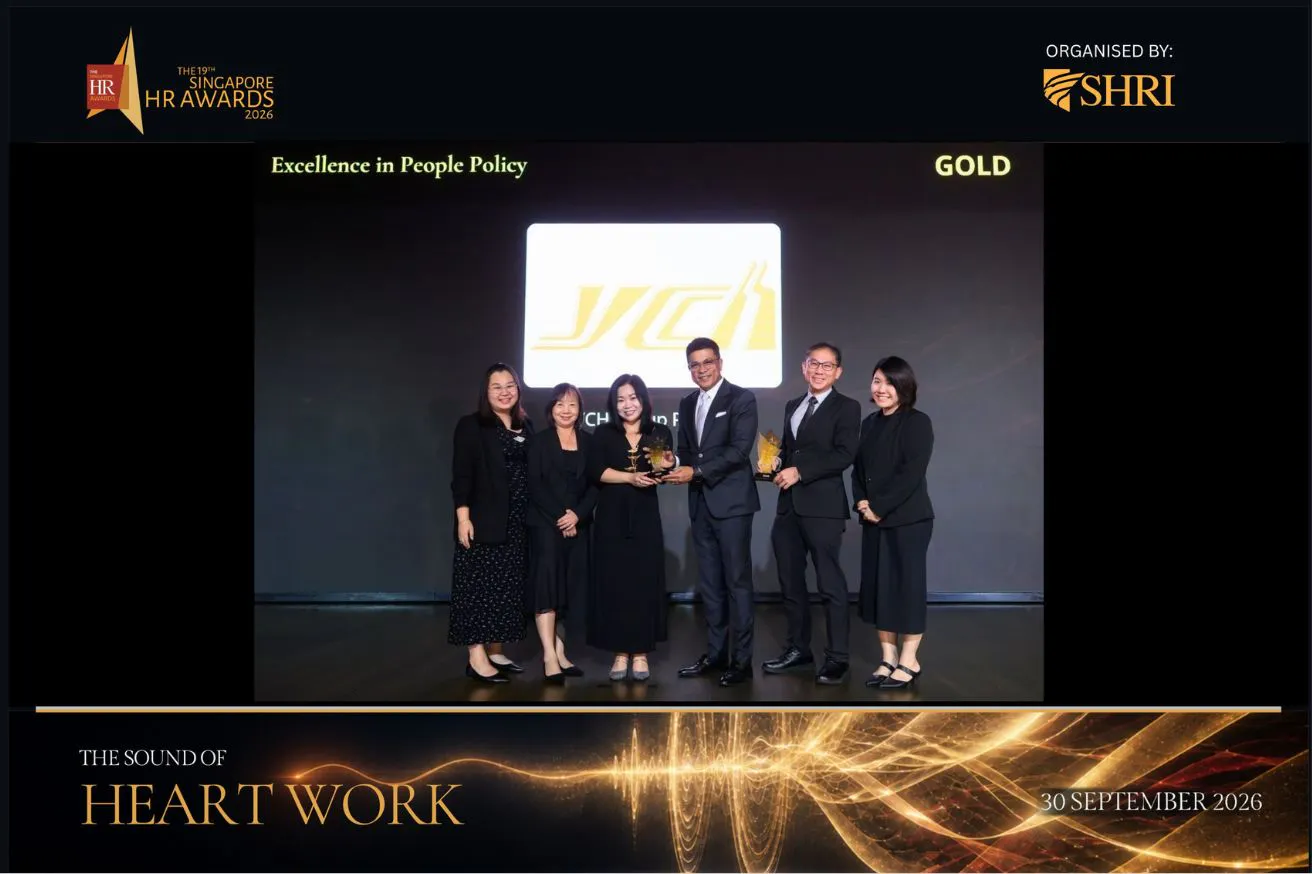
Winning Gold in the Singapore HR Awards Excellence in People Policy category goes beyond having good human resource (HR) programmes.
For this category, companies must demonstrate efforts of workplace flexibility, sustainable employee performance, fair employment practices, industrial relations, workplace dignity, policy responsiveness and workforce communication.
For Annie Lam, Chief People Officer of YCH Group, the award reflects years of deliberate effort to transform people policies from standalone initiatives into an integrated workforce ecosystem.
“People Policy is how an organisation turns its values into everyday practices,” says Annie. “At YCH, we focused on building an integrated people policy ecosystem around the employee journey.”
From workforce complexity to workforce agility
As a leading supply chain and logistics organisation in Singapore, YCH manages a diverse workforce spanning operational, technical and corporate roles across the region. Balancing operational continuity with rising expectations for flexibility, career growth and wellbeing presented a significant challenge.
Meanwhile, an ageing workforce and evolving fair employment requirements required policies that could remain relevant across different career and life stages.
Against this backdrop, YCH redesigned its people policies around a life-stage framework. The enterprise integrated flexible work arrangements, career development pathways, leadership acceleration, retirement and re-employment support, employee voice mechanisms and workplace fairness into a single ecosystem.
That approach aligns to Singapore Ministry of Manpower’s (MOM) Tripartite Guidelines on Flexible Work Arrangement Requests, recognising FWAs as a key talent attraction, retention and business continuity strategy.
Turning policy into measurable business outcomes
Another challenge it faced was sustaining workforce resilience while strengthening leadership succession and knowledge retention in the fast-changing logistics sector.
YCH linked performance management, learning, succession planning and internal mobility into one talent system. The results included annual promotion rates reaching 10-12%, leadership programme participants achieving strong retention, and several employees progressing into senior leadership roles. Re-employment acceptance rates reached 90%, while continuation rates improved to 100% by 2025, supporting workforce stability and institutional knowledge retention.
YCH earns a Gold Award for its HR strategy at a time when workforce transformation has become a boardroom priority. According to the MOM, permanent employment among residents reached a record 90.8% in 2025, while Professionals, Managers, Executives and Technicians (PMETs) now account for 64.2% of resident employment. These data points reflect the growing importance of skills development, leadership pipelines and career progression.
As organisations prepare for the Workplace Fairness Act 2025 and embed flexible work practices under the Tripartite Guidelines on Flexible Work Arrangement Requests, progressive people policies are increasingly viewed as a business imperative rather than an HR initiative.
YCH's award-winning approach demonstrates how organisations can align workforce wellbeing, employability and business performance through an integrated people strategy.
“We've created an environment where people can grow and contribute sustainably while enabling our organisation to remain agile and future-ready,” says Annie.
For HR leaders, YCH's success demonstrates that people policies are not built through isolated initiatives. Successful people policies emerge when fairness, flexibility, workforce planning and leadership development operate as one coherent system.
Where to Start
1. What skills are needed to achieve the success featured in this story?
HR professionals need capabilities in workforce planning, employment law and industrial relations and flexible work implementation. Equally important are capabilities in talent management, leadership development and workforce analytics. These skills enable HR leaders to design people policies that balance business performance with employee wellbeing and workforce sustainability.
2. How does SHRI support HR professionals looking to build these capabilities?
YCH's success was built on strong policy governance, fair employment practices, workforce development and stakeholder engagement. SHRI offers solutions that can help to develop similar capabilities to support both individual and organisational transformation.
SHRI’s IHRP Certified Professional Preparation Bundle (Paper B) programme aligns with this story because it strengthens expertise in strategic HR, workforce planning, policy governance, talent management and business partnering, all critical capabilities demonstrated by YCH.
Its WSG-funded Employment Law & Industrial Relations (ELIR) and Handling Grievances and Staff Discipline Effectively (HGSDE) courses are relevant to workplace fairness, grievance management, tripartite guidelines, employee relations and policy implementation.
SHRI supports organisations with customised corporate workshops, in-house training and group enrolment programmes that can help HR teams implement workforce flexibility, workplace fairness and leadership development frameworks at scale.