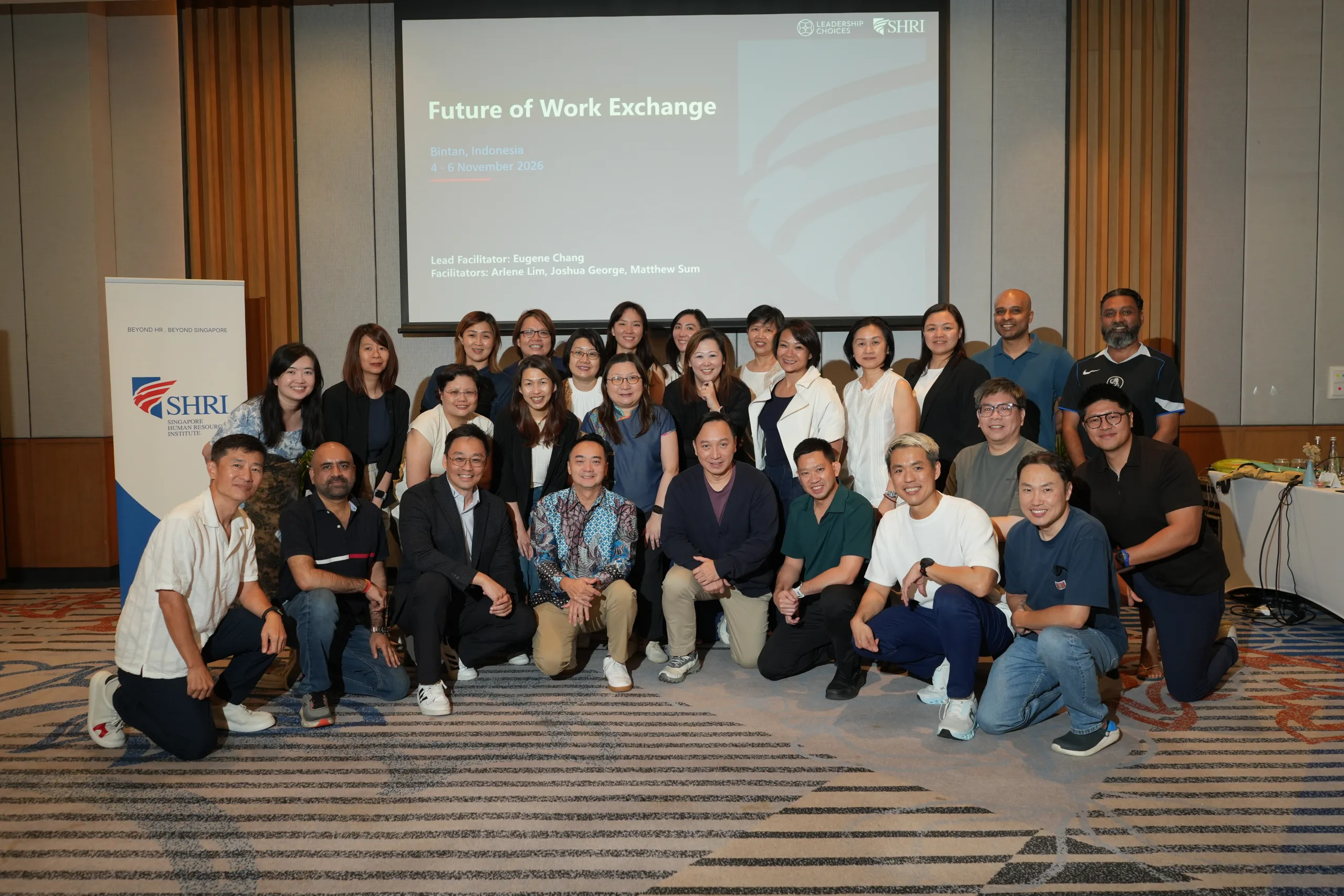
As AI transforms how work gets done, organisations face an uncomfortable question: Could the pursuit of greater efficiency leave us with less human expertise? At SHRI's inaugural Future of Work Exchange, 23 senior HR leaders explored what it will take to ensure people continue to grow alongside technology.
What happens when an organisation becomes so efficient that it forgets how to develop its people?
AI can now produce reports, analyse complex information and complete tasks that once demanded years of professional experience. For organisations under constant pressure to do more with less, the possibilities are extraordinary.
Yet beneath the promise of productivity lies a less obvious danger. The work that technology is making easier is often the very work through which people learn to become good at what they do.
A junior analyst learns to recognise patterns by studying numbers. A young lawyer develops judgement by working through difficult cases. An aspiring HR professional learns to navigate human complexity through conversations, mistakes and experience.
What happens when much of that work can be completed by a machine?
For 23 senior HR leaders who gathered in Bintan, Indonesia, from 4 to 6 November for SHRI's inaugural Future of Work Exchange, this question raised a fundamental challenge: How do we embrace the capabilities of AI while preserving the development of our own?
The efficiency trap
Consider an example discussed during the exchange.
A risk team reduced the time required to analyse evidence from three weeks to a single day by using multiple AI models to check one another's work.
An extraordinary productivity gain. But what happened to the time saved?
The organisation simply expected more work to be done.
It is a familiar corporate instinct. When technology creates additional capacity, organisations often respond by increasing output expectations. Yet greater output does not automatically translate into greater organisational capability.
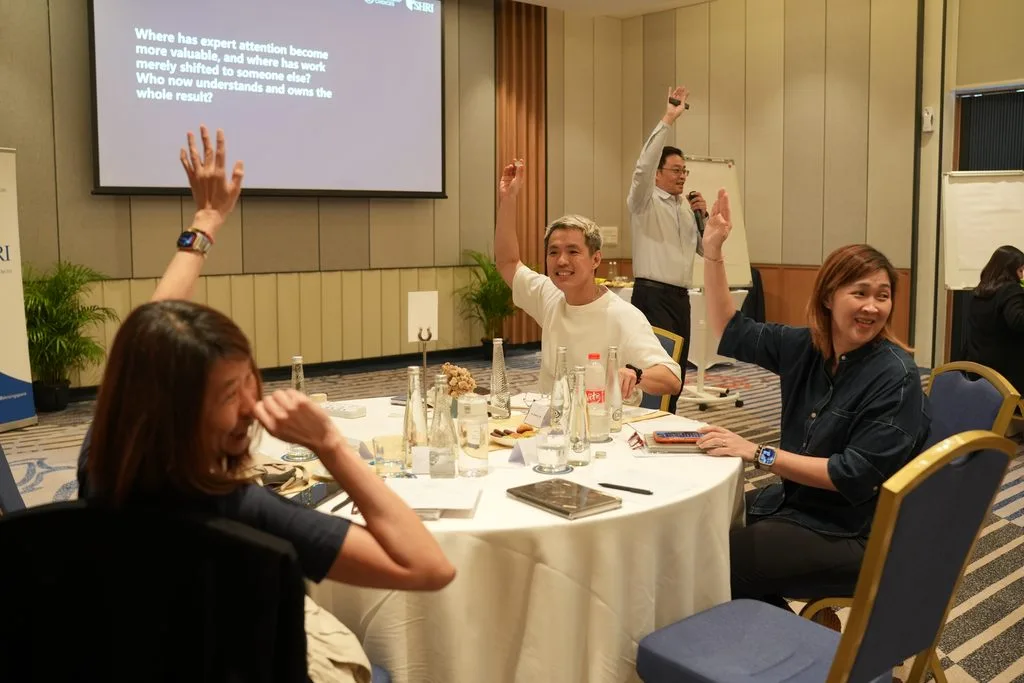
What if that additional time were used to develop employees, strengthen customer relationships or explore new business opportunities?
The exchange also examined how IKEA used AI to automate routine customer service enquiries while retraining employees for advisory roles. The example illustrated how organisations could use automation as an opportunity to rethink the value people contribute.
These decisions reveal a deeper leadership challenge. Organisations need to determine what they want to achieve with AI, and how the benefits of greater efficiency will be reinvested.
The real measure of AI's value lies in what organisations choose to do with the capabilities and capacity it creates.
Who will teach the next generation?
For decades, professional expertise has been built through a familiar progression.
People begin with simpler tasks. They observe experienced colleagues, make mistakes, receive feedback and gradually take on greater responsibilities.
The process can be slow, imperfect and occasionally frustrating. It is also how judgement develops.
AI is beginning to disrupt that progression.
When entry-level analysis, drafting, research and administrative work can be automated, the economic case for hiring junior employees may become harder to justify.
For an individual organisation, reducing entry-level positions may appear entirely rational.
Across an industry, however, the consequences could be profound.
If fewer graduates are given opportunities to learn their craft, where will the experienced professionals of tomorrow come from?
And if every organisation prefers to hire people who already possess expertise, who will take responsibility for developing them?
This dilemma featured prominently in the Bintan discussions. Participants considered the importance of preserving entry-level opportunities, offering meaningful internships and ensuring younger professionals continue to learn directly from experienced colleagues.
But there is another dimension to the problem.
Expertise can be lost just as easily as it can fail to develop.
An experienced professional who increasingly delegates analysis and decision-making to AI may gradually become less practised at exercising those capabilities independently.
The danger is subtle. An employee may continue to hold the same title, carry the same responsibilities and appear equally productive, even as the judgement underpinning their expertise begins to weaken.
Organisations therefore face two interconnected challenges: developing the next generation of professionals while ensuring existing experts continue to sharpen their skills.
Both demand greater intentionality in how work is designed.
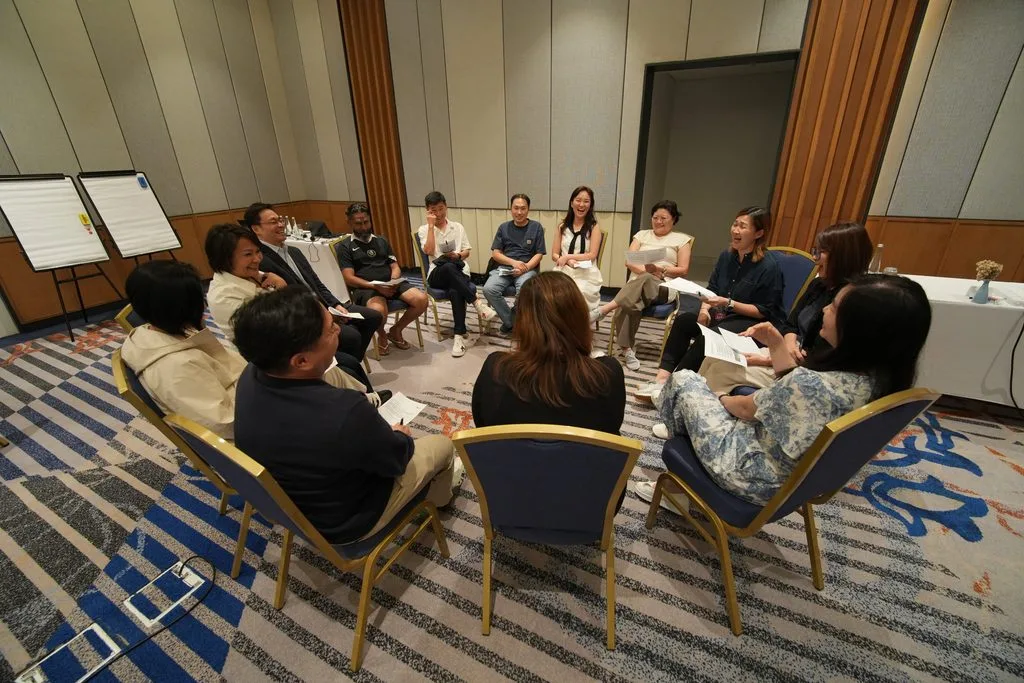
When everyone has access to intelligence, what makes someone an expert?
A relatively inexperienced employee can now use AI to produce work that resembles the output of a seasoned professional. Reports can be polished, presentations refined and recommendations generated with remarkable speed.
But producing a convincing answer and knowing whether it is the right answer require different capabilities.
An experienced HR professional understands that a technically correct policy recommendation may still fail because it overlooks organisational culture or the realities of implementation.
A business leader recognises when the numbers tell only part of the story.
These forms of judgement develop through experience, exposure, reflection and an understanding of consequences.
As AI assumes more responsibility for producing work, human expertise increasingly shifts towards defining problems, interpreting results and deciding what should happen next.
That responsibility becomes especially important when technology makes mistakes.
One example explored during the exchange involved senior lawyers who were asked to review AI-assisted work only at the final approval stage. Without visibility of the decisions made along the way, identifying errors became more difficult.
It raises a troubling question: Can we genuinely hold people accountable for decisions when they no longer understand how those decisions were reached?
Human oversight requires more than a signature at the end of a process. It requires sufficient expertise and authority to question the work, challenge its assumptions and intervene when necessary.
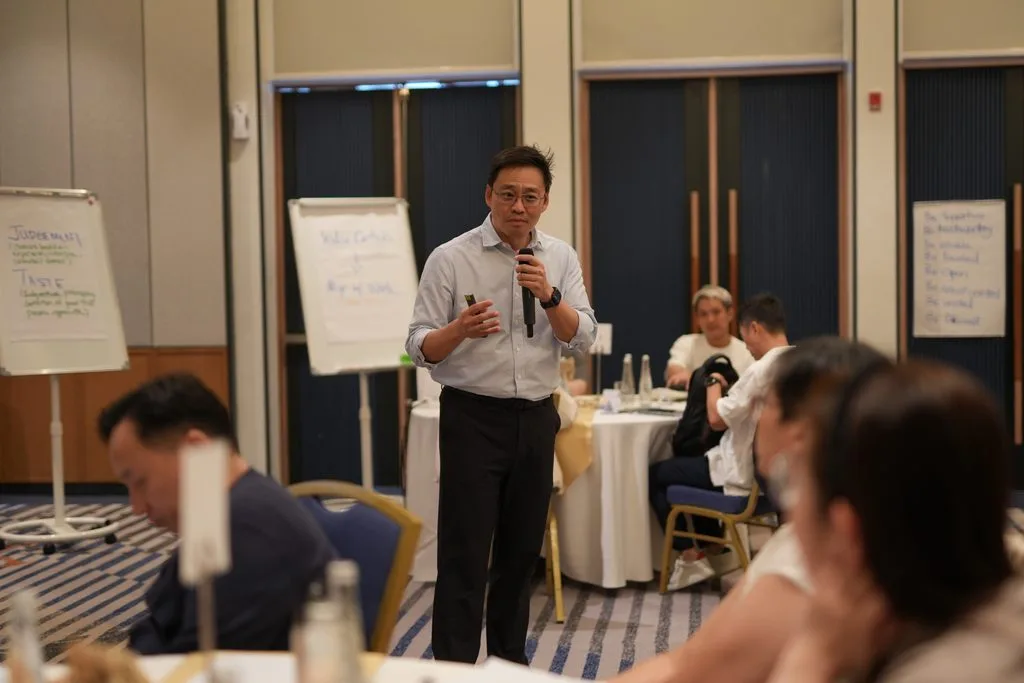
As Eugene Chang, Lead Facilitator of the exchange, observed:
"The human becomes more consequential for you to train, because you are putting the untrained pilot behind a very sophisticated system."
The more powerful technology becomes, the greater the importance of developing people with the judgement to use it responsibly.
For leaders, this means examining how employees gain experience, how expertise is shared and which capabilities must remain firmly within human hands.
It also means recognising that some experiences are valuable precisely because they demand effort. Working through uncertainty, resolving disagreements and learning from mistakes are often what transform knowledge into judgement.
As organisations redesign work around AI, preserving these opportunities may prove as important as introducing the technology itself.
The conversations that will shape what comes next
On the final morning of the exchange, participants were invited to illustrate what they had learned.
One group drew a farmer who had lost control of his powerful ox, which subsequently damaged the land it was meant to help cultivate. Another drew a small bird learning to fly.
Others illustrated different pathways towards success, supported by mentors, colleagues and peers.
The images captured a shared understanding: technology may expand what organisations can achieve, but people still need the opportunities and support to develop alongside it.
Perhaps one of the most meaningful outcomes of the exchange was the recognition that even experienced HR leaders are grappling with questions for which there are few straightforward answers.
The challenges may differ across industries, but the underlying concerns are remarkably similar.
What capabilities must we preserve? What new ones must we develop? And how do we prepare people for a future that continues to change?
For the leaders in Bintan, exchanging perspectives across sectors offered new ways of approaching these questions, along with the reassurance that they were navigating these uncertainties together.
As one participant reflected,
"Knowing that you are not alone in this AI journey is comforting."
The future of work will be shaped by the technologies we adopt, the decisions leaders make and the experiences we create for the people who will inherit that future.
And perhaps the most consequential question organisations should be asking today is this:
As we teach machines to do more of our work, are we doing enough to help people become better at theirs?