
By Kaye Zhao and Dylan Chia
From Skills to Strategy
Today, workforce development is as much a national priority as it is a business necessity. As industries evolve and new technologies redefine how work is done, organisations face an urgent need to understand the skills that power their success, both now and in the years ahead.
The latest Budget reaffirmed Singapore’s commitment to lifelong learning, introducing enhancements such as the SkillsFuture Mid-Career Training Allowance and a refreshed Workfare Skills Support scheme for lower-wage workers. These measures reflect an important national intent but the work of developing people ultimately happens within organisations.
To prepare for the future, employers must first identify the skill gaps they are seeing, both in the short term and over the longer horizon. This clarity forms the foundation for how companies hire, develop, and retain their people.
Understanding Skill Gaps
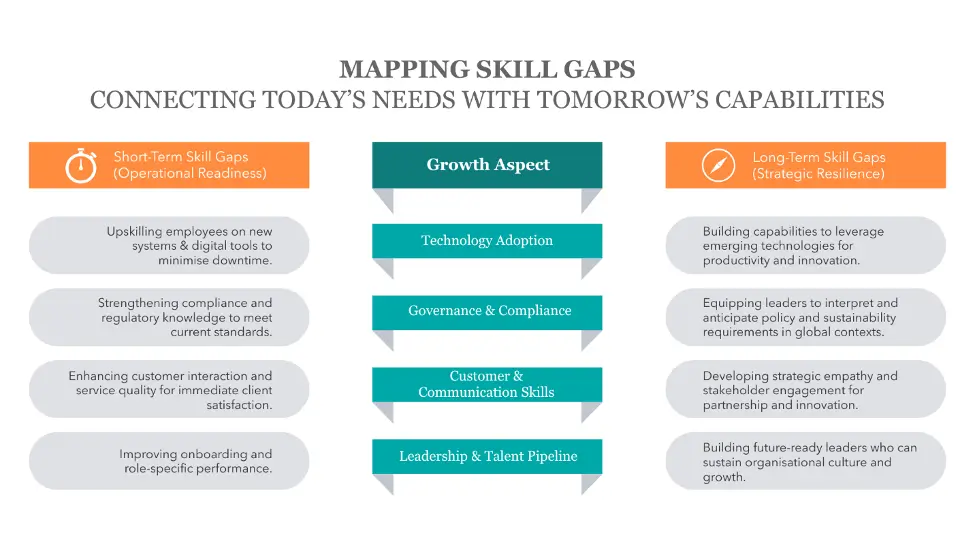
Every organisation carries a distinct skill signature, which is the sum of capabilities that determine how well it can execute its strategy. Identifying which of these skills are depleting, emerging, or at risk is the first step toward building a future-ready workforce.
Short-term gaps often point to immediate operational challenges such as new systems to adopt, customer needs to meet, or compliance standards to maintain. Long-term gaps, however, reveal strategic blind spots like the skills that will be needed to seize future opportunities or manage transformation.
When organisations map these skill requirements carefully, they move from ad-hoc training to deliberate workforce design. Skills data can then inform decisions on hiring, career mobility, and succession planning, ensuring that workforce development is purposeful rather than reactive.
Skill Development as Strategic HR
Skill development is a core element of strategic HR. It directly influences how organisations achieve their business outcomes, all the way from productivity to innovation, and from employee engagement to long-term sustainability.
When HR leaders align learning investments with corporate priorities, every training effort contributes to measurable value.
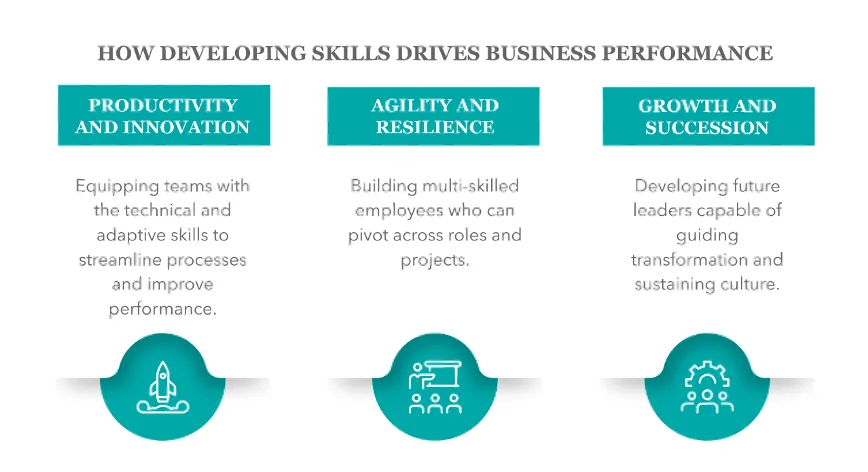
- Productivity and innovation: equipping teams with the technical and adaptive skills to streamline processes and improve performance.
- Agility and resilience: building multi-skilled employees who can pivot across roles and projects.
- Growth and succession: developing future leaders capable of guiding transformation and sustaining culture.
The ability to link these efforts to organisational results marks the evolution of HR from a support function to a strategic partner in growth.
From Potential to Performance
At Nippon Sanso Holdings Singapore, skill development begins with recognising potential. During hiring, emphasis is placed on a candidate’s capacity to learn and grow within the company. This is followed by programmes that nurture Proactive, Innovative, and Collaborative Gas Professionals.
Its Leadership Development Programme identifies employees with strong learning agility and builds their competencies through projects, mentoring, and structured learning. The outcomes speak for themselves - higher engagement, improved performance, and internal promotions that strengthen business continuity.
As Senior Vice President of Human Resources, Pauline Loo believes such initiatives are integral to organisational vitality. “When people grow, their capacity to contribute also expands. Hiring is never about filling positions; it is about building the organisation’s future.”
Developing Progress
Workforce development is ultimately an investment in organisational progress. It supports performance today while preparing the business for tomorrow’s shifts in technology, demographics, and customer expectations.
By identifying skill gaps early, aligning development to business strategy, and measuring the outcomes that matter, HR leaders can transform learning from an act of compliance into a driver of competitiveness.
At SHRI, we believe developing people is key to developing progress. Because when individuals grow with purpose, organisations gain the strength to thrive in a changing world.
Join the conversation
Learn how leading employers are redefining hiring at our upcoming event, Winning with People – Hiring for Potential. Hear from Pauline Loo and other business leaders on how to identify, nurture, and hire for potential in a changing world of work.
Have a question or a perspective to share?
Drop us a message on LinkedIn or email marcom@shri.org.sg. Your thoughts could inspire our next Winning with People discussion!